Welcome to Hebei diao Rubber Products Co., Ltd.
Content number
Contact email

NEWS CENTER
29
2026
-
01
When Should Automotive Silicone Hoses Be Replaced?
Author:
When Should Automotive Silicone Hoses Be Replaced?
As engine compartments become increasingly complex and operate under higher temperatures, greater demands are placed on the stability and reliability of hose materials used in intake systems, cooling systems, and turbocharged pipelines. Compared with traditional rubber hoses, automotive silicone hoses are widely adopted due to their excellent heat resistance and aging performance.
However, a common question remains in practical use: Do automotive silicone hoses need to be replaced frequently? And when is replacement truly necessary?
Automotive Silicone Hoses Are Not Regular Wear Parts
Industry consensus indicates that high-quality automotive silicone hoses are not consumable components.
When the material formulation is appropriate, the structural design is reasonable, and installation is performed correctly, silicone hoses can maintain stable performance over a long service life—often significantly longer than conventional rubber hoses.
Therefore, replacement decisions should not be based solely on service time, but rather on the actual condition and performance of the hose.

Visual Changes That Require Attention
During routine inspection or maintenance, the following visible signs may indicate aging or performance degradation and should prompt closer evaluation:
-
Visible cracking or fine surface fractures, especially in high-temperature areas
-
Sticky surfaces, powder residue, or abnormal tactile feel
-
Whitening after friction that does not recover to the original appearance
These symptoms typically suggest a loss of flexibility and structural stability, increasing the risk of failure during continued use.

Structural Abnormalities Require Immediate Replacement
Compared with surface appearance, structural defects are clear signals that replacement is necessary. Common issues include:
-
Hose wall bulging, localized swelling, or deformation
-
Delamination or blistering between the silicone layer and reinforcement layers
-
Unusual softening at hose ends or connection areas
Such conditions usually indicate damage to the internal reinforcement structure and may lead to system failure or hose rupture if not addressed promptly.
Functional Issues Are Also Critical Indicators
Even if external appearance remains acceptable, replacement should be considered when the following functional problems occur:
-
Repeated leakage in cooling or air systems despite proper clamps and connections
-
Noticeable hardening after high-temperature operation, with no recovery after cooling
These signs often indicate irreversible aging of the silicone material and a loss of sealing performance.
Normal Phenomena That Do Not Require Replacement
Not all changes mean a hose must be replaced. The following conditions are generally considered normal and acceptable:
-
Darkening or slight yellowing of color
-
Installation marks without leakage or deformation
-
Long service life with retained elasticity and sealing capability
As long as the hose structure remains intact and performance is stable, continued use is acceptable.
Industry Perspective: Hose Quality Determines Long-Term Reliability
In practical applications, whether an automotive silicone hose requires replacement ultimately depends on material stability, structural design, and long-term performance consistency. This is why vehicle manufacturers, performance tuners, and system integrators increasingly emphasize product origin and manufacturing processes when selecting silicone hoses.
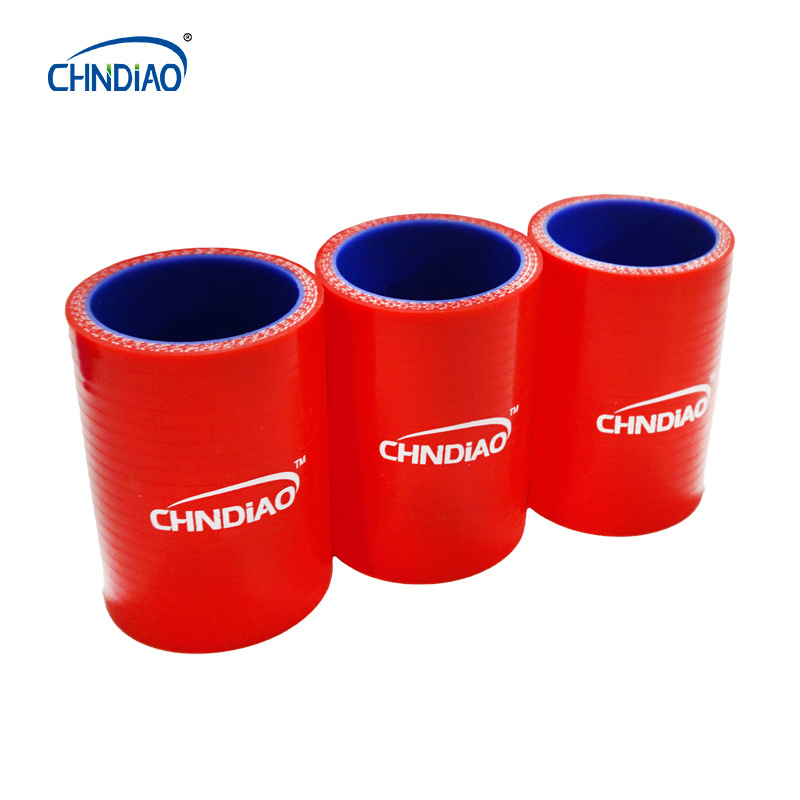
DIAO automotive silicone hoses are manufactured using high-quality silicone rubber compounds and a hand-wrapped construction process, reinforced with multiple layers of polyester or aramid fabric. This structure provides excellent resistance to high temperatures, high pressures, and long-term pulsating loads. Compared with conventional extruded silicone hoses, hand-wrapped hoses offer more uniform structure, improved fatigue resistance, and a reduced risk of premature aging, delamination, or bulging.
For vehicle owners and system suppliers alike, choosing a structurally reliable and well-manufactured automotive silicone hose means lower maintenance frequency, reduced system failure risk, and extended overall service life—key reasons why high-quality automotive silicone hoses continue to gain recognition across the industry.

high temperature flexible hose pipe,silicone auto hoses,intercooler turbo hose pipe,silicone turbo hose,car air intake hose,turbocharger intercooler hose,silicone hoses for coolant,90 degree elbow hose
Previous page

Our factory specializes in the production and supply of high quality silicone hoses, food grade silicone hoses, medical silicone hoses, fuel hoses, radiator hoses, air rubber hoses, EPDM sealing strips, spiral protective covers and silicone plates and other trucks, automotive rubber accessories (support OEM and ODM).
Our address
Wangguanzhuang Town, Qinghe County, Xingtai City, Hebei Province,China